
SCIENCE BEHIND
Equine Hanna Somatics® (EHS)
What is POSTURE?
Abnormal or Maladaptive Compensatory Posture
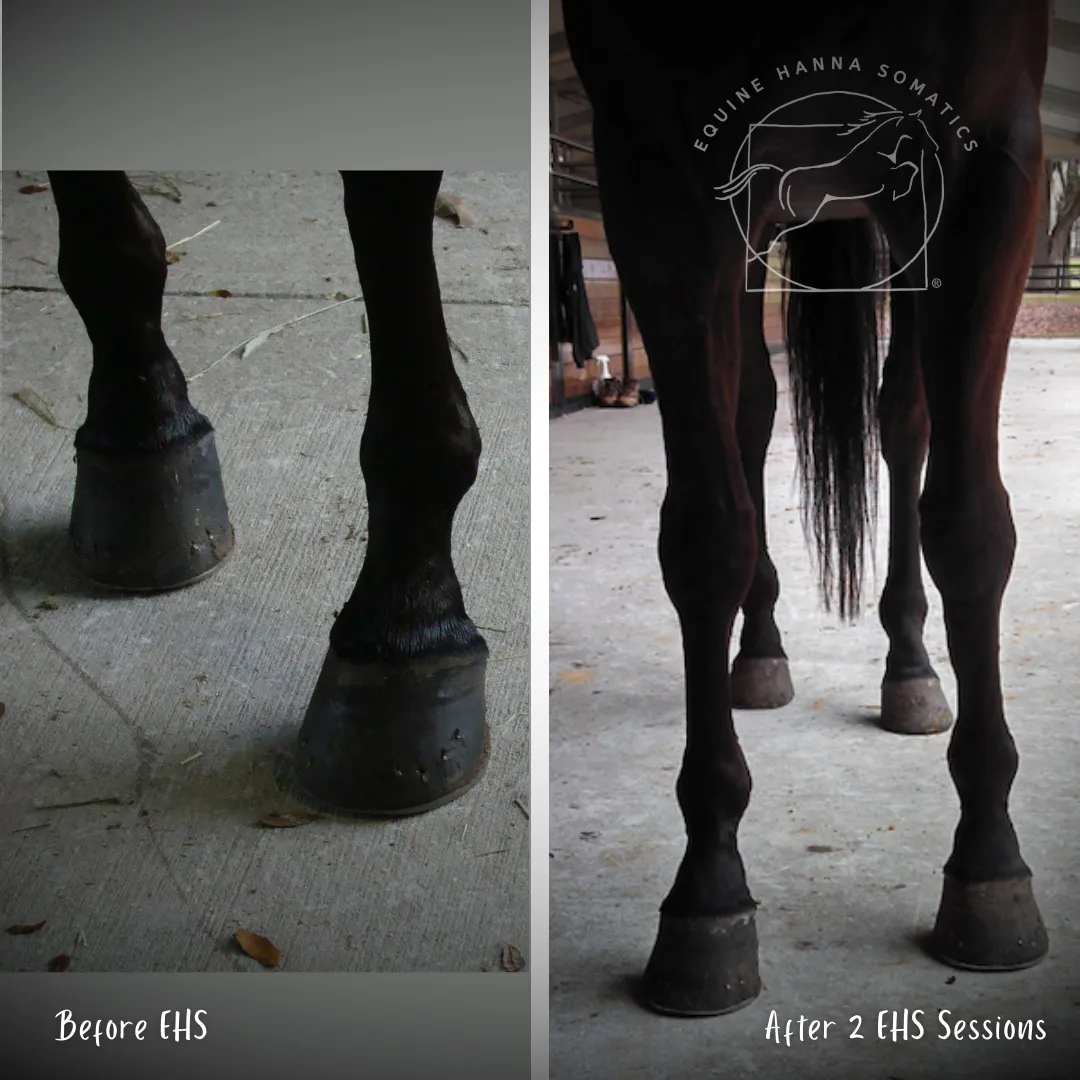


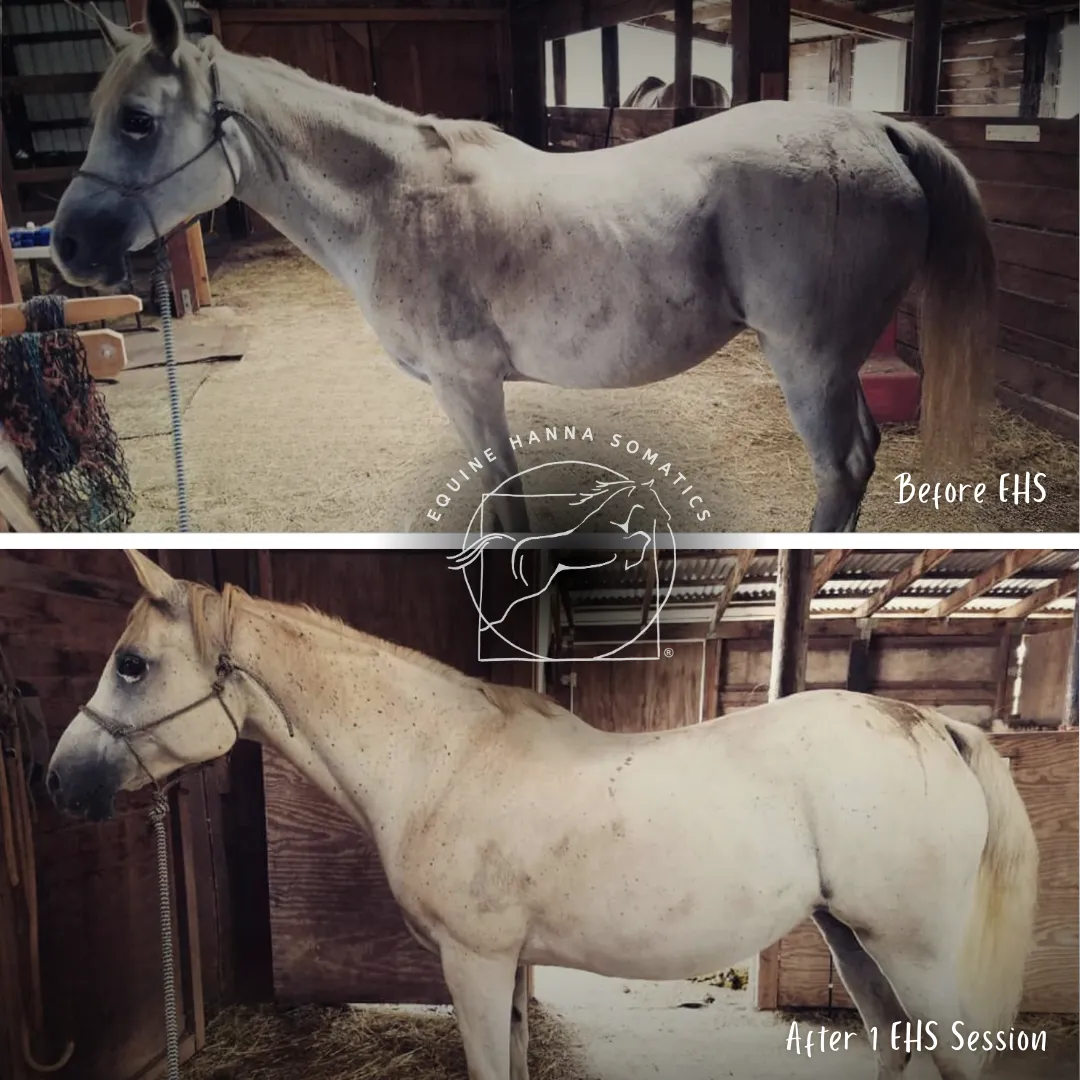
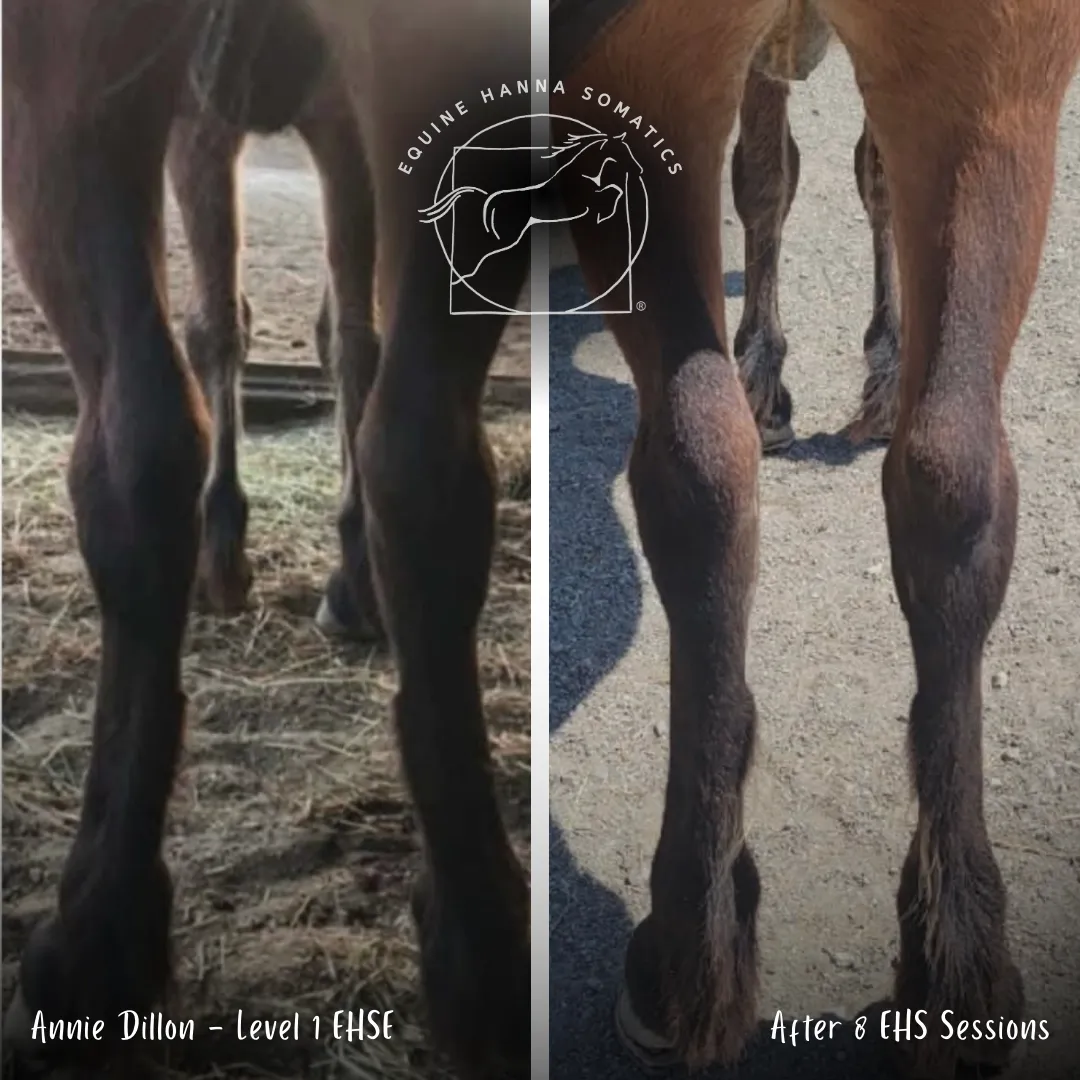

PHOTOS: Horses who presented with various examples of the characteristic maladaptive compensatory habitual postures typically reversible with Equine Hanna Somatics® Education.
Posture is an unconsciously mediated adaptive process of the nervous system that organizes the body as best it can to remain upright and in equilibrium against gravity and environmental factors, moment by moment, within the range of motion allowed by the current levels of resting myofascial tone. (Mayer 2013)
As horses adapt to their environment, they learn to keep various muscles habitually contracted, creating persistent areas of elevated resting myofascial tonus (aka tension).
It is this persistent tension that pulls the horse out of his or her natural alignment, creates postural patterns, and negatively impacts movement, soundness and well-being.
And once it's learned, it becomes the 'new normal' default posture that is maintained by involuntarily mediated motor output coming from the brain stem...
REFERENCES
Cacciatore, T. W., Anderson, D. I., & Cohen, R. G. (2024). Central mechanisms of muscle tone regulation: implications for pain and performance. Frontiers in neuroscience, 18, 1511783. https://doi.org/10.3389/fnins.2024.1511783
Criswell, E. & Mayer, A. (2006-2025) Equine Hanna Somatics® Professional Training Program Manual
Hanna, T. (1988) Somatics - Reawakening the Mind’s Control of Movement, Flexibility and Health. Da Capo Press
PHOTOS: Horses who presented with various examples of the characteristic maladaptive compensatory habitual postures typically reversible with Equine Hanna Somatics® Education.
REFERENCES
Cacciatore, T. W., Anderson, D. I., & Cohen, R. G. (2024). Central mechanisms of muscle tone regulation: implications for pain and performance. Frontiers in neuroscience, 18, 1511783. https://doi.org/10.3389/fnins.2024.1511783
Criswell, E. & Mayer, A. (2006-2025) Equine Hanna Somatics® Professional Training Program Manual
Hanna, T. (1988) Somatics - Reawakening the Mind’s Control of Movement, Flexibility and Health. Da Capo Press
The PROBLEM
Compensation and chronic tension are natural adaptive responses to stress, trauma and repetitive motion.
Manual therapy, stretching and strengthening or conscious efforts at controlling posture or 'relaxing' do not address the centrally controlled 🧠 nervous system complexities underlying muscle tone...(Cacciatore et al. 2024)
Vets, bodyworkers, physiotherapists, riders and trainers have always known relaxation and 'releases' were essential, but they were impossible to define, explain or access on demand. UNTIL NOW.
What is PANDICULATION?
Pandiculation is nature's postural reset.
Pandiculation is a natural behavior that contributes to the development and maintenance of a horse's neuromuscular integrity and mind-body integration at all ages and stages of life.
All animals spontaneously pandiculate, typically after a period of inactivity like sleeping or being confined.
Pandiculation can be done standing or laying down (ie. recumbent), and looks like a symmetrical full-body stretch, often accompanied by a yawn - or it can involve just one or two limbs at a time, or one limb and the neck, or wing… there are many variations on the ways different animals pandiculate.
Foals even pandiculate in their mother’s womb, and have been observed pandiculating up to 80 times per day after being born, as soon as on their 3rd day of life!
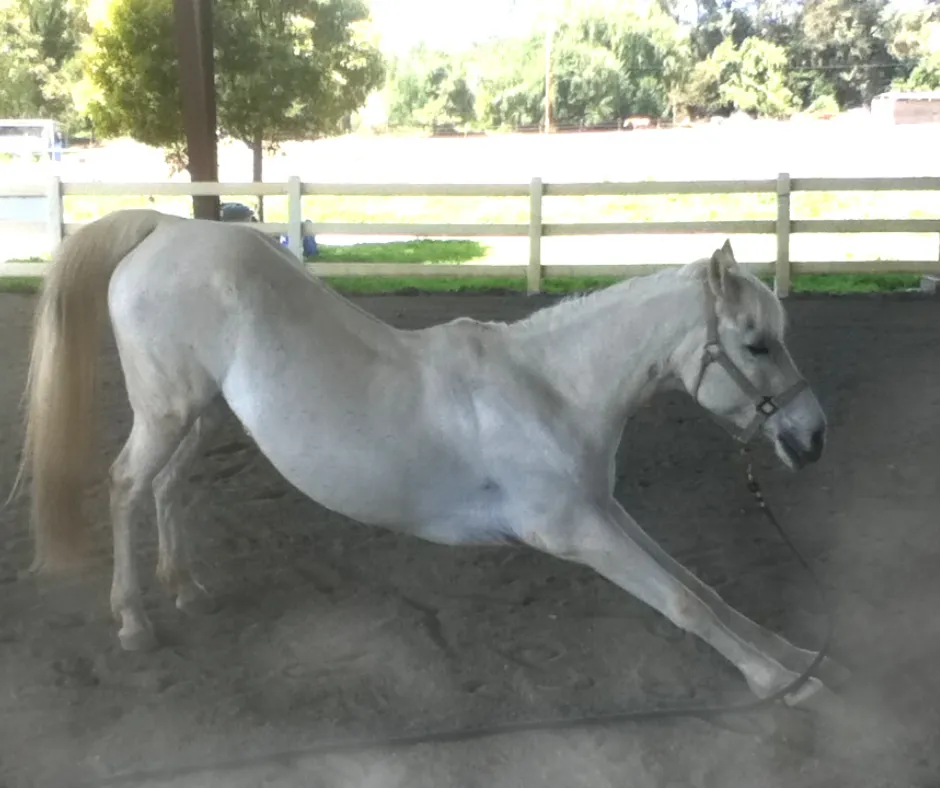
PHOTO: Aged Arabian mare demonstrating a spontaneous pandiculation reflex after an EHS session.
REFERENCES
A.F. Fraser, Pandiculation: the comparative phenomenon of systematic stretching, Applied Animal Behaviour Science, Volume 23, Issue 3, 1989, Pages 263-268, ISSN 0168-1591, https://www.sciencedirect.com/science/article/abs/pii/0168159189901172?via%3Dihub
Bertolucci L. F. (2011). Pandiculation: nature's way of maintaining the functional integrity of the myofascial system?. Journal of bodywork and movement therapies, 15(3), 268–280. https://doi.org/10.1016/j.jbmt.2010.12.006
McGreevy, P. (2012). Equine Behavior, A Guide for Veterinarians and Equine Scientists (2nd ed.) Saunders Elsevier
The SOLUTION
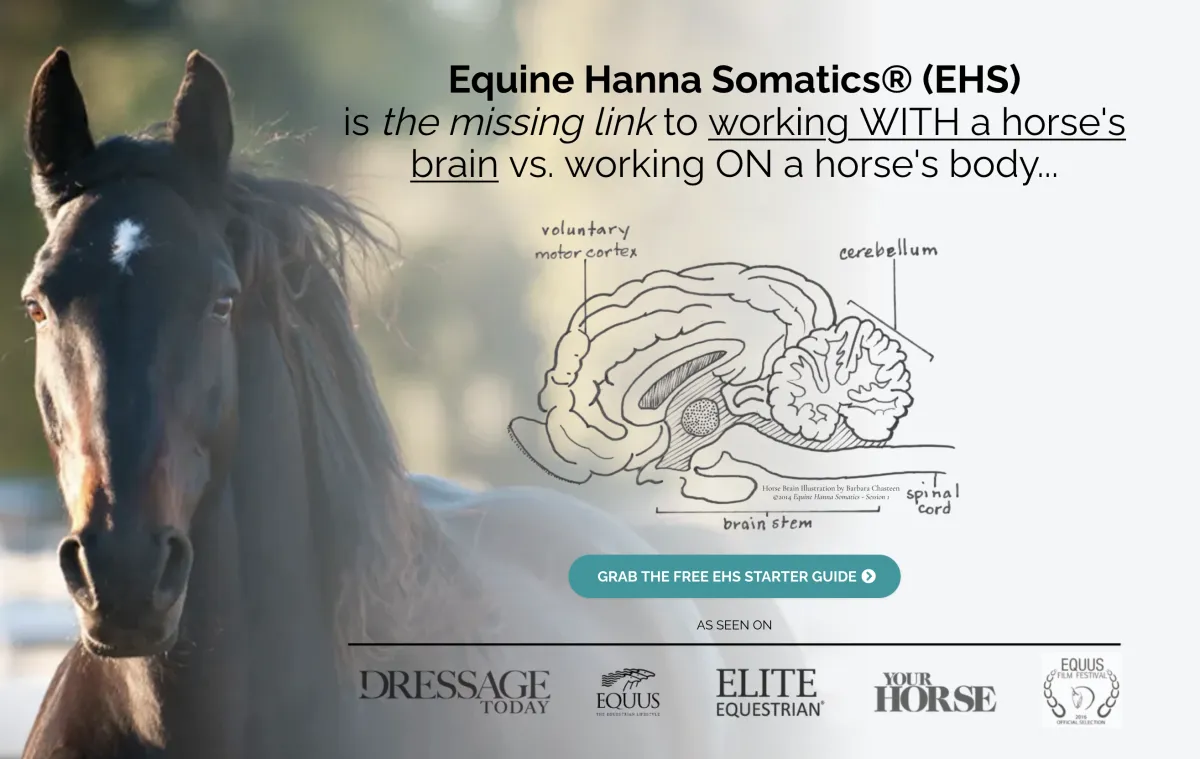
The solution is working WITH a horse's BRAIN, not ON a horse's BODY!
Dr. Eleanor Criswell Ed.D. created Equine Hanna Somatics® (EHS) - a hands-on method of helping horses self-correct their own default posture back to NORMAL NEUTRAL without stretching, manual manipulation or machines!
EHS is horse-centric somatic education based on the principles of basic neuroscience and the natural tendency of horses to pandiculate.
VOLUNTARY PANDICULATION
EHS is Pandiculation ON-Demand
Instead of hoping a horse spontaneously pandiculates during or after a 'treatment' - in EHS we invite the horse to actively participate in guided VOLUNTARY PANDICULATION exercises. This allows us to work strategically and efficiently with the root-cause of most muscular tension - the brain and the way it organizes it's body for movement.
By working WITH the horse's brain to engage the Pandicular Response on-demand, we can access the existing pathways and programs of the horse's nervous system to efficiently target areas of habitual tension - and facilitate the horse in normalizing them from the inside.
Equine Hanna Somatics® is the only system that teaches you how to safely and systematically harness the power of Pandiculation to help horses effect rapid and semi-permanent changes to their own baseline levels of muscle tone - from WITHIN.
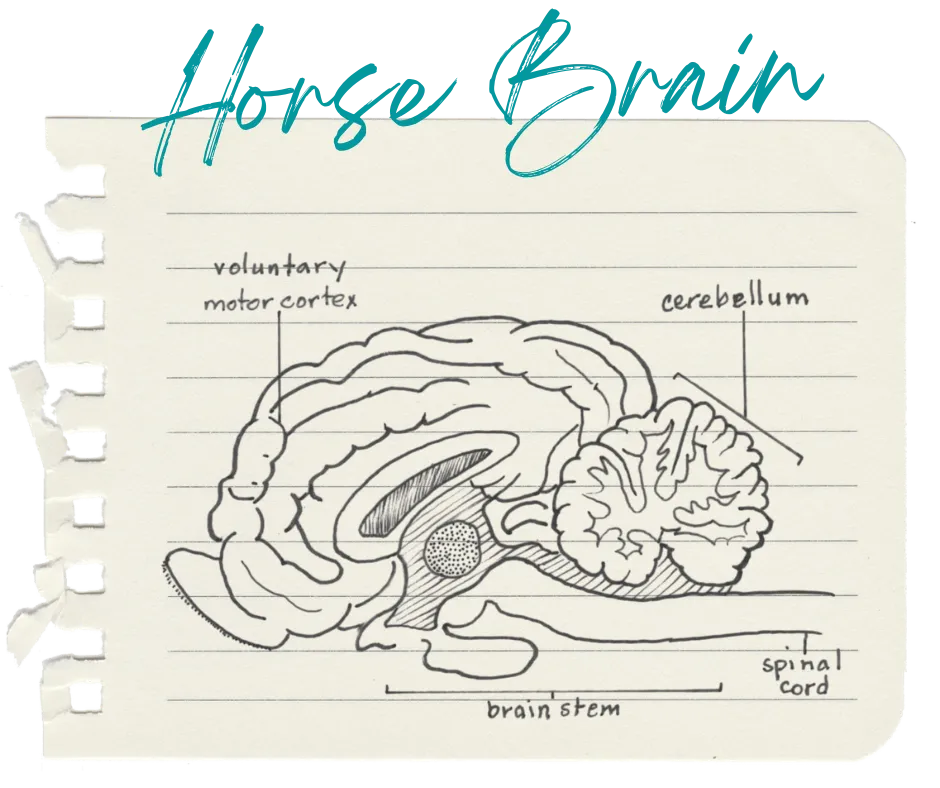
ILLUSTRATION: ©2013 Horse Brain by Barbara Chasteen, from Equine Hanna Somatics - Session 1 (introductory course)
REFERENCES:
Criswell, E. (2021) How Eleanor Criswell Created Equine Somatics (originally published 1997, Somatics Magazine: Journal of the Bodily Arts and Sciences) https://blog.equinehannasomatics.org/post/creating-equine-hanna-somatics
Hanna, T. (1990) Clinical Somatic Education: A New Discipline in the Field of Healthcare. Somatics Magazine: Journal of the Bodily Arts and Sciences, 4-10. https://equinehannasomatics.org/clinical-somatics-pdf
THIS is what WE mean when we say:
"in Equine Hanna Somatics we work WITH - not ON - horses."
Characteristic Equine Postural Presentations
The most common maladaptive compensatory postures are caused by habituated stress-responses, which typically present in one of three easily recognizable postural patterns:
Green Light Posture
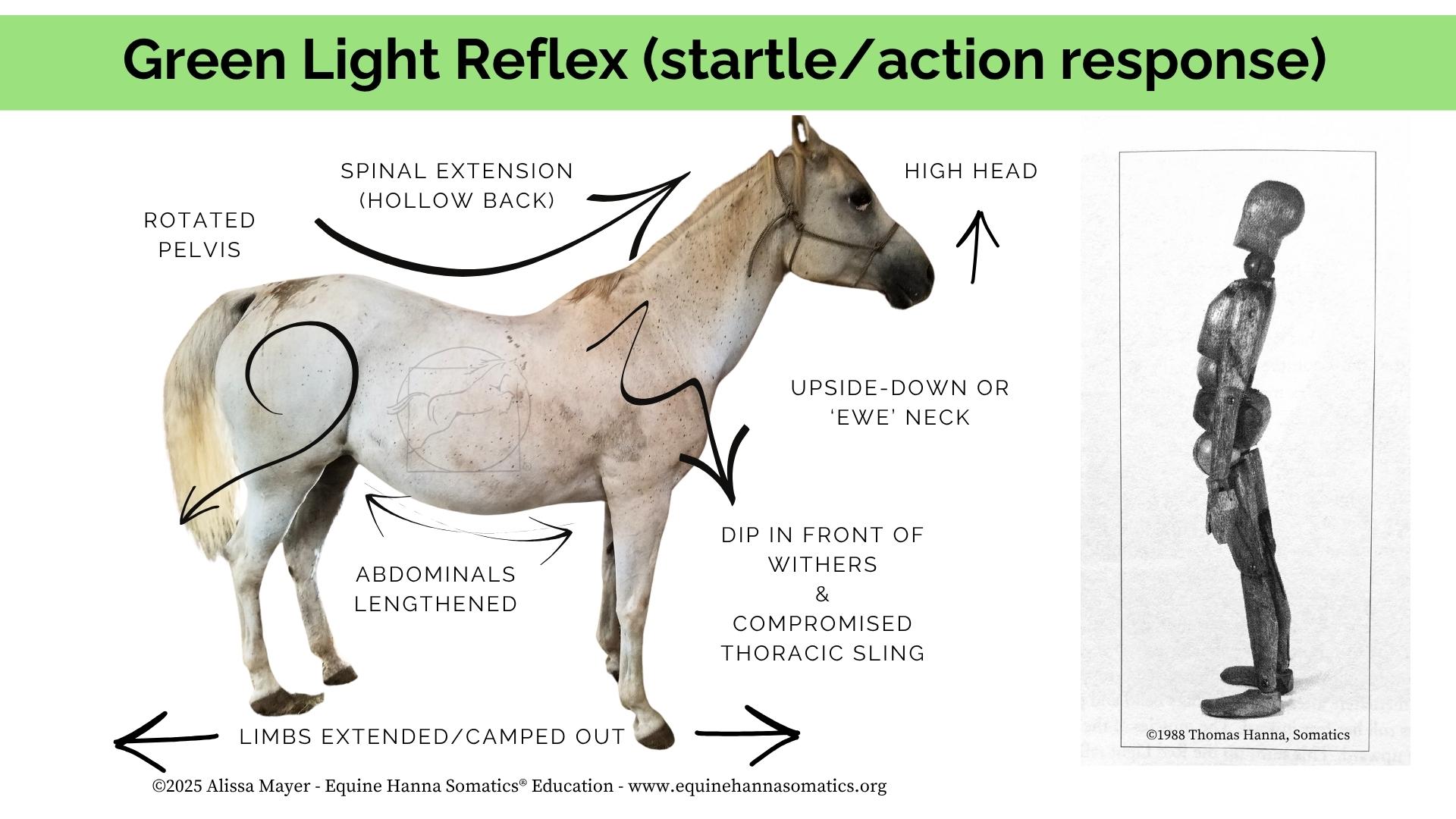
The Green Light Posture shows up when a horse is startled, afraid or excited, and is commonly known as "fight or flight." This is the Startle/Action Response.
Habitual contractions above the vertebral column produce persistent spinal extension, downward pressure on the thorax, a camped out limb position, and...
Red Light Posture
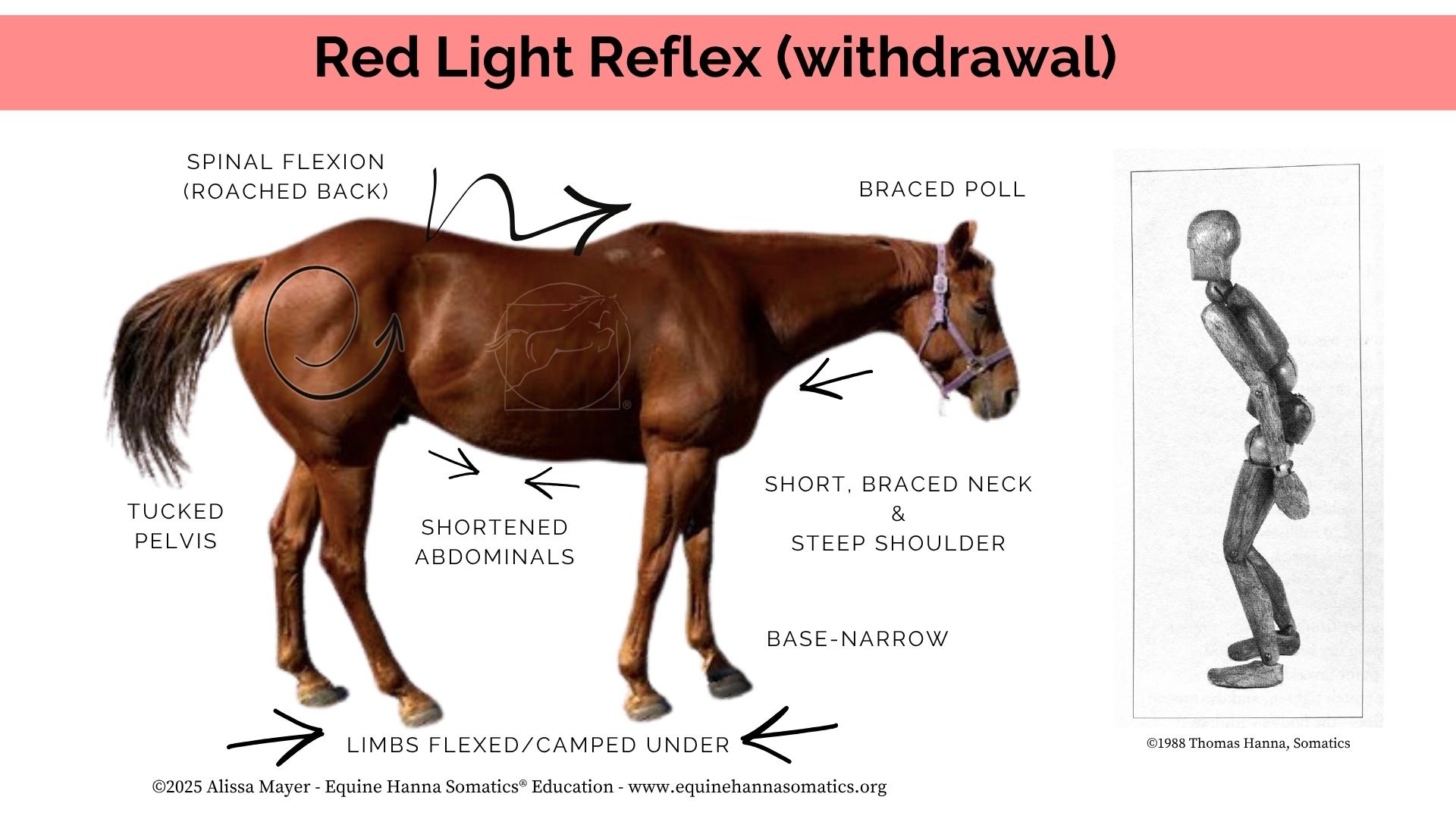
The Red Light Posture shows up when a horse is withdrawing from their reality, usually because they cannot escape confinement or pain, and is commonly referred to as "shut down" or "introverted." This is the Withdrawal Response.
Habitual contractions below the vertebral column produce persistent spinal flexion, a camped under limb position, and...
Trauma/Asymmetry Posture
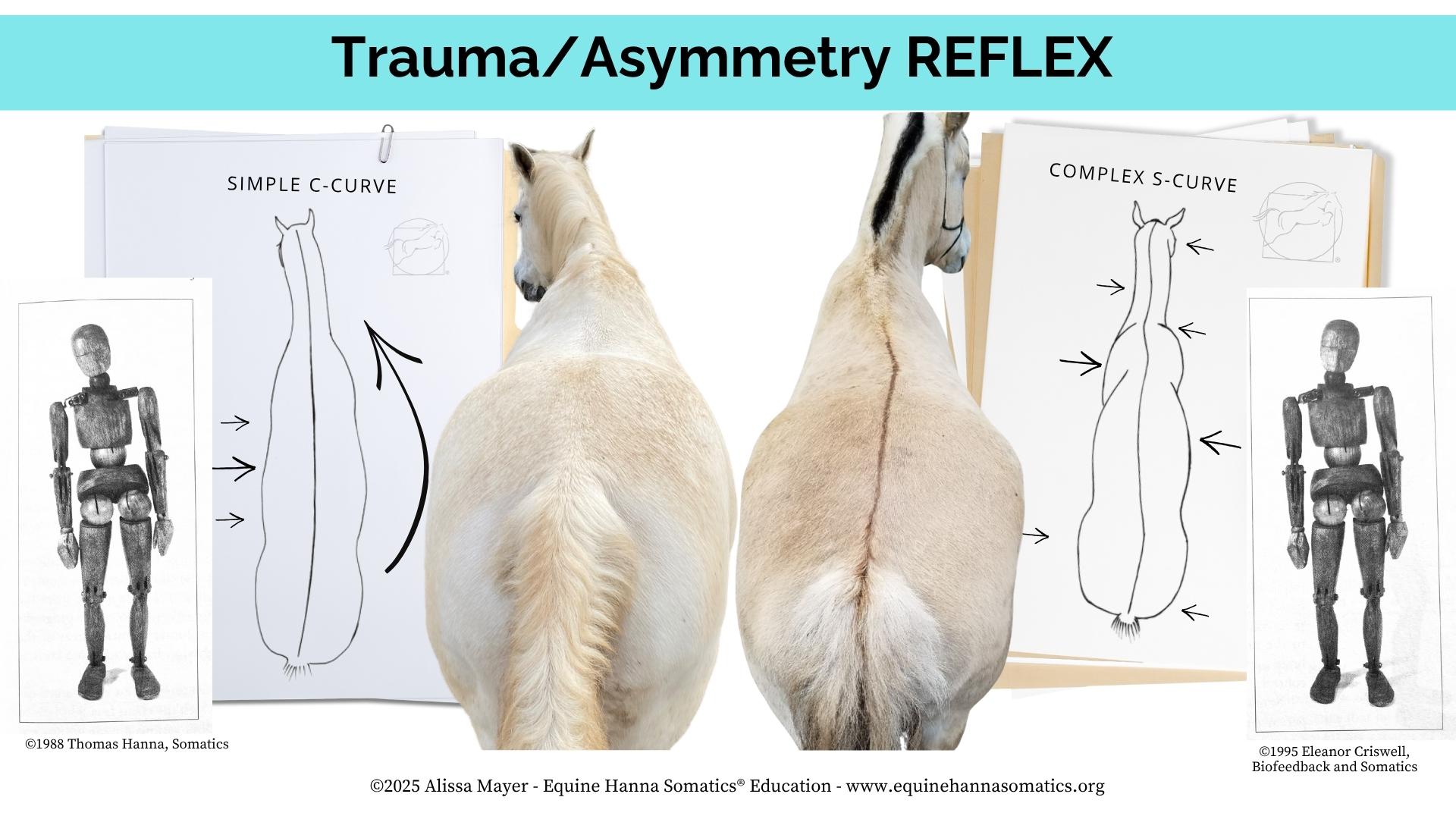
The Trauma/Asymmetry Posture (ie. crookedness) is often mistaken for laterality or "natural asymmetry" and it shows up when a horse is habitually contracting the muscles on one side of their body more strongly than the other.
This is typically an Antalgic (pain-avoidance) Response involving the withdrawal and crossed-extensor reflexes that becomes habituated, OR it can be learned from repetitive motion...
Before we can accurately assess conformation, asymmetry, soundness, strength or behavioral issues, we must identify and address the involuntary habitual tension that is pulling the horse out of alignment and creating the persistent postural deviations, functional weakness and crookedness everyone is trying to 'correct.'
The role of Equine Hanna Somatics® is to help a horse's brain recognize inefficient and unconscious muscle contractions that are no longer useful, so they can regain conscious control over their own muscles and, therefore, also regain access to their full range of motion, comfort, strength and endurance."
- Alissa Mayer, BSc(Equine) C-EHSE
Director of the EHS Professional Training Program
The BENEFITS
Case Studies and Published Research
Cognitive Enhancement
Athletic Performance
Injury Prevention
Real-life stories and studies that show the benefits of Hanna Somatic Education on body & mind.
Hvordan Virker Equine Hanna Somatics®?
Equine Hanna Somatics® (EHS) er en neuro-videnskabelig baseret, pålidelig, ikke-invasiv og sikker tilgang, der hurtigt hjælper heste med at opnå de præstations- og velvære-fordele, som mange terapeutiske metoder og former for kropsbehandling (bodywork) lover – men ikke altid kan levere.

EHS er en tilpasning af Hanna Somatic Education®, som er en dokumenteret, naturlig og sikker metode til smertelindring og sanse-motorisk træning. Hanna Somatic Education® er udviklet af Thomas Hanna til mennesker, og senere modificeret og anvendt på dyr af Eleanor Criswell.
Ligesom mennesker, oplever heste stress og udvikler kronisk spændte muskler, som begrænser bevægelse og er årsag til ubehag.
Med tiden bliver dette til kroniske, lavintense muskelkontraktioner – også kaldet “spænding” eller “stramme muskler” – en del af hestens vanemæssige kropsholdning og bevægelsesmønster.
Dette kaldes også Motorisk Sensorisk Amnesi (MSA eller SMA).
Når det sker, forringes præstation, bevægelsesfrihed og komfort, og den spændte kropsholdning og bevægelsesmønstre er vanskelige at ændre – selv med gymnastisk træning, jordarbejde eller manuel terapi. EHS går direkte til den egentlige årsag til spændingen – hestens hjerne – for at løsne og frigøre hestens naturlige kropsholdning, bevægelsesmønster og give ligevægt.
Hvad sker der under en session med en Equine Hanna Somatics®-underviser (EHSE)??
Formålet med EHS er at hjælpe hesten med at genkende ineffektive og ubevidste muskelspændinger, så den kan genvinde bevidst kontrol over sine muskler – og dermed få adgang til sin fulde bevægelsesfrihed, komfort, styrke og udholdenhed.

Dette gøres ved at føre hver hest gennem en skræddersyet serie af somatiske bevægelser, der opfordrer hesten til bevidst at aktivere forskellige muskler og muskelgrupper under både den koncentriske (når musklerne forkortes) og den excentriske fase (når musklerne forlænges) af muskelkontraktionen.
Dette sker gennem en særlig tilgang baseret på hestens naturlige tendens til at pandikulere (strække sig og spænde/afspænde kroppen bevidst) – kaldet frivillig pandikulation, den innovative teknik udviklet af Thomas Hanna og navngivet af Eleanor Criswell. Når heste pandikulerer, nulstiller hjernestammen den hvilende muskeltonus i de involverede muskler. På denne måde kommer musklerne tilbage til deres normale, neutrale niveauer.

Hver session med begynder med en vurdering udført af en professionel Equine Hanna Somatics Educator. Det inkluderer observation af statisk holdning, palpation af muskeltonus og vurdering af hestens bevægelse for at afgøre, hvilke muskler der trækker sig unormalt sammen, og om EHS er passende eller ej for hesten.
Du kan finde en Equine Hanna Somatics Educator i vores behandlerregister.
Baseret på denne vurdering vælger din Equine Hanna Somatics Educator den passende EHS-protokol og tilpasser den efter behov, mens hesten guides gennem de somatiske bevægelser. Sessionen afsluttes altid med en opfølgende vurdering, og ejeren får som regel op til tre øvelser som “hjemmearbejde” mellem sessionerne.
Hver hest bestemmer selv, hvor længe den aktive del af sessionen varer, og det hele tager normalt 1–2 timer (afhængigt af hvor fortrolig hesten er med EHS). Typisk anbefales det at starte med tre EHS-sessioner i løbet af den første uge eller måned (afhængig af hesten), og derefter planlægge tre opfølgende sessioner ugentligt eller månedligt afhængigt af hestens udvikling, træningsniveau og individuelle behov.
Kan heste rides efter Equine Hanna Somatics®?
Heste bør ikke rides, arbejdes hårdt eller sættes på udfordrende terræn (eller sammen med heste der flytter rundt på dem eller aggressive heste) i flere timer efter en EHS-session – men de skal have mulighed for at bevæge sig frit, så de kan integrere deres nye muskeltonus og opdatere deres kropsbevidsthed. Let arbejde for hånd i skridt - gå en lille tur, rolige øvelser - cirkelvolter i skridt eller foldtid i et sikkert område med bevægelsesfrihed og adgang til frisk vand er ideelt efter EHS. Nogle heste vil gerne sove, før de bevæger sig igen – og det er helt i orden.
Det er helt fint at ride før en EHS-session, så længe hesten har haft tid til at køle helt af og tørre (typisk omkring en time).
Bortset fra særlige tilfælde er der ingen grund til at undgå ridning eller træning mellem sessioner – de fleste heste kan vende tilbage til arbejde næste dag – da der ikke kræves nogen hvile- eller restitutionsperiode efter den blide behandling. Tværtimod hjælper bevægelse ofte hesten med at integrere resultaterne af sin nye muskeltonus yderligere.
Ved at arbejde med hestens naturlige bevægelsesmønstre og neuromuskulære fysiologi kan EHS skabe en “dialog” mellem hesten og dens nervesystem, som fører til hurtige og dybtgående forbedringer, der ikke forsvinder efter hver session. Faktisk er resultaterne kumulative, meget pålidelige og langvarige – ofte beskrevet som halv-permanente.

Resultaterne af EHS er så konsistente, at næsten alle kan hjælpe deres hest med at nyde fordelene ved de grundlæggende somatiske øvelser. Bare ved at udføre den første “Initial Pick-up”-bevægelse kan en hest slippe spændinger i mere end 30 muskler!
Når dette sker, bremser vi symptomerne på og forebygger udviklingen af den tilstand, som Thomas Hanna kaldte Sensorisk Motorisk Amnesi, og som Eleanor Criswell senere omdøbte til Motorisk Sensorisk Amnesi (MSA) – for præcist at afspejle, at Hanna Somatic Education primært er en motorisk intervention.
Hvad er Motorisk Sensorisk Amnesi (MSA)?
Når både krop og hjerne tilpasser sig stress eller gentagne bevægelser som en overlevelsesmekanisme, bliver de involverede muskler gradvist mere spændte. Denne nye “normaltilstand” af forhøjet muskelspænding integreres i hjernens autopilotsystem gennem en primitiv læringsproces kaldet habituering (tilvænning).
Når denne tilpasning bliver en vane (eller “muskelhukommelse”), opretholder hestens hjernestamme ubevidst de nye standardniveauer af muskeltonus og kropsholdning – og “glemmer”, hvordan det tidligere føltes at bevæge sig. Dette er Motorisk Sensorisk Amnesi.
En hest med MSA kan vise tegn som:
Kronisk stivhed eller spænding
Skævhed, asymmetri eller tilsyneladende muskelatrofi
Ændret kropsholdning og/eller ændret bevægelsesmønster
En “god” og en “dårlig” side
Knuder, buler eller “mærkelig kropsholdning”
Kort skridt, ujævn eller uens skridttakt
Og symptomer som:
Smerte, ømhed eller “skiftende halthed”
Tab af bevægelsesfrihed (Tab af ROM - Range of motion))
Svaghed, træthed eller lav energi
Dårligt humør, uopmærksomhed eller afstandstagen
Negativ eller stereotyp adfærd
Nedsat præstation
Andre symptomer forbundet med “ældning”
MSA kan ikke helbredes med medicin, manuel manipulation eller kirurgi, men kan kontrolleres bevidst efter den genindlæringsproces, der sker under en EHS-session. Her hjælper EHS hestens eget nervesystem med at genkende og normalisere uhensigtsmæssige muskelspændinger – også kaldet kompensationsmønstre.
Med andre ord kan EHS både bremse og vende eksisterende kompensationer forårsaget af kronisk muskelspænding og forebygge fremtidige ophobninger af Motorisk Sensorisk Amnesi.

Fordelene ved Equine Hanna Somatics® omfatter:
Forbedret præstation og atletisk formåen
Genskabe og udvide kropsbevidsthed og motorisk kontrol
Bedre sundhed, komfort og trivsel
Mindre asymmetri og forbedret kropsholdning
Øget bevægelsesfrihed, elasticitet og skridtlængde
Mere smidighed, fleksibilitet og ligeudretning
Forebyggelse af skader og forlænget aktiv karriere
Øget udholdenhed og hurtigere restitution
Øget afspændthed og generelt velvære
Bedre samarbejdsvilje og arbejdsglæde
Styrket bånd mellem hest og rytter
RESOURCES
Criswell, E. & Mayer, A. (2006-2025) Equine Hanna Somatics® Professional Training Program Manual
Hanna, T. (1988) Somatics - Reawakening the Mind’s Control of Movement, Flexibility and Health. Da Capo Press
EHS Professional Training and Certification Program: https://www.equinehannasomatics.org/training
Oversat til dansk fra den originale engelske version af Mette Andersen Level 1 EHSE
EHS is not something that can be done TO a horse by the practitioner, but is a voluntary activity that we facilitate. It's a guided conversation we invite a horse to have WITH their own nervous system."
- Ryan Moschell LMT, CHSE
Director of the HSE Professional Training Program, EHS Education Co-instructor
GET THE INTRODUCTORY ONLINE COURSE
Equine Hanna Somatics - SESSION 1
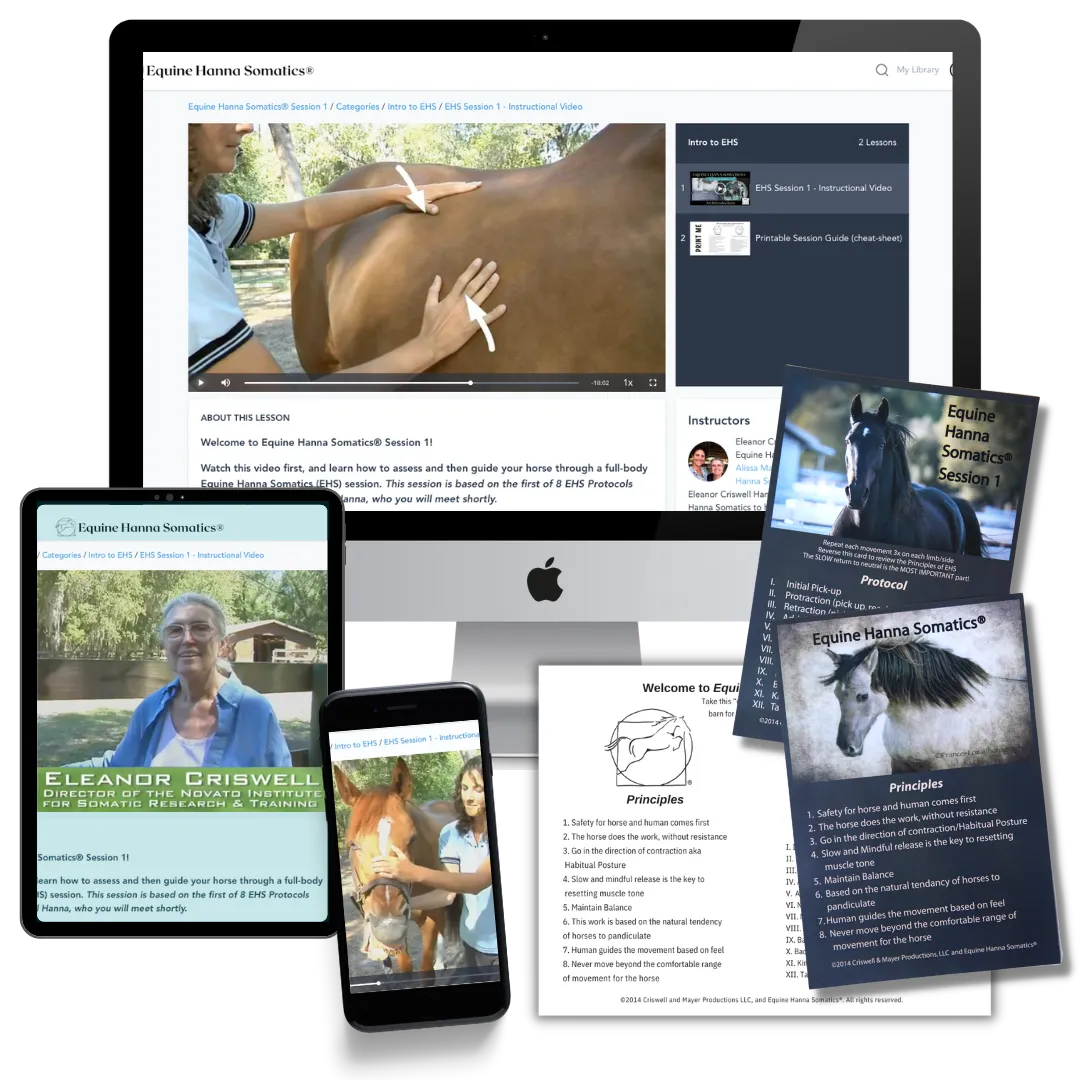
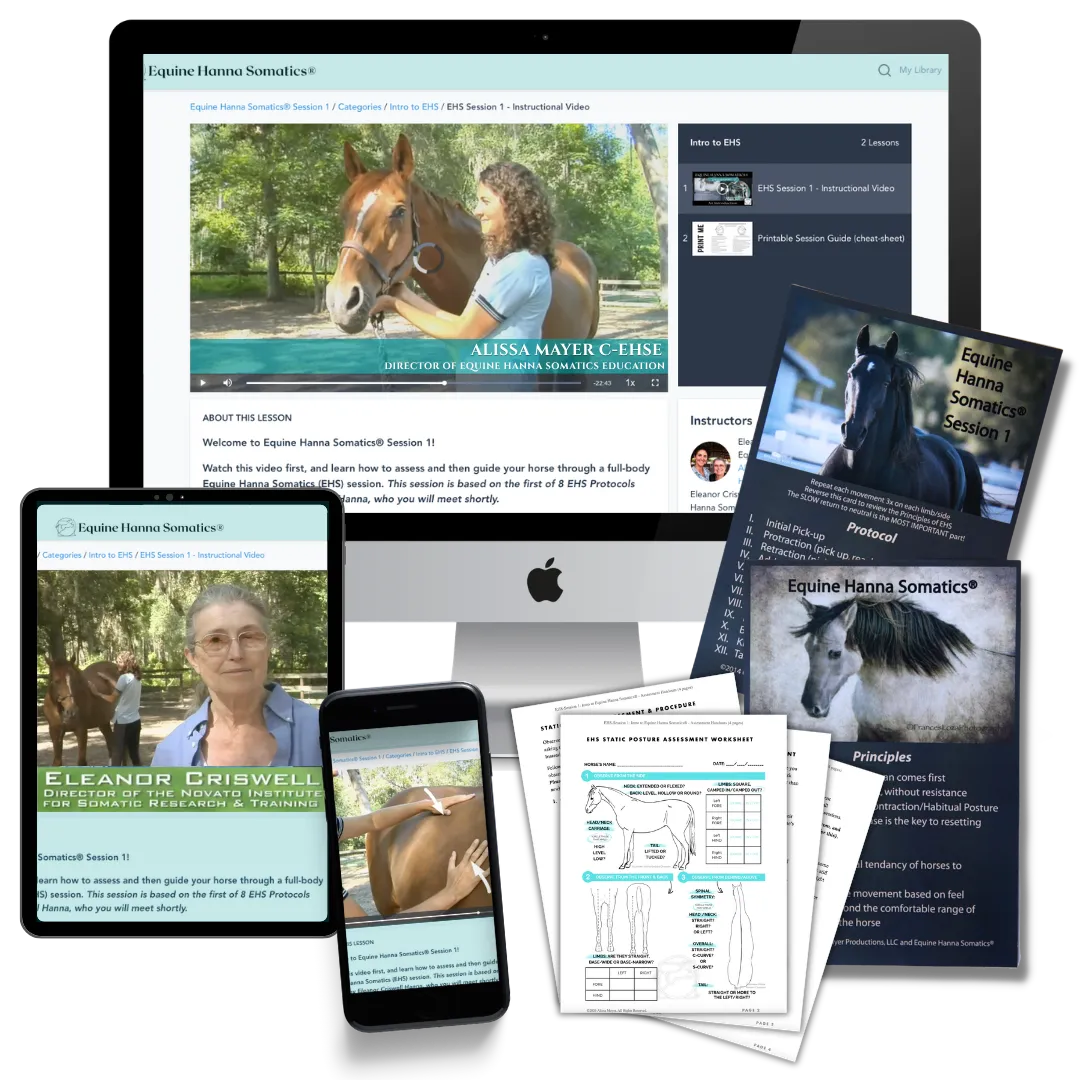
Watch a full-body Equine Hanna Somatics® session, including pre- and post-session assessments, and learn how to start doing EHS with your own horse, TODAY!

Disclaimer: Equine/Canine/Human Hanna Somatics is not bodywork or manual therapy, and is not a diagnostic or treatment tool. The information included on this website and in any affiliated programs is intended for educational purposes only and is not meant to take the place of professional veterinary or medical advice, may not be current, and is subject to change without notice. We encourage all members of the community to seek guidance from a licensed veterinarian, physician or allied healthcare practitioner regarding specific medical concerns or questions about your own or your animal’s health.
EQUINE HANNA SOMATICS® EDUCATION



INFO
LEARN
LEGAL
©2014-2026 Criswell & Mayer Productions LLC and Feel, Embodied LLC. All Rights Reserved.